Article: How to Sell Gold and Estate Jewelry Without Getting Undervalued: A Jeweler's Checklist
How to Sell Gold and Estate Jewelry Without Getting Undervalued: A Jeweler's Checklist
Selling gold and estate jewelry can feel intimidating, especially if you have never done it before. Whether you are settling an estate, liquidating unworn pieces from an old relationship, or turning forgotten drawer items into immediate cash, the fear of being lowballed is entirely valid. The secondary market is filled with unlicensed kiosks, high-pressure pawnshops, and mail-in envelope services that count on sellers not understanding the bench physics or true intrinsic value of what they hold.
At Studio Jewelers, family owned and operated inside the Bay Plaza Shopping Center since 1990, we have walked three generations of Bronx, Westchester, and upper Manhattan families through the valuation process. An informed seller is always our favorite client. When you know how precious metals are measured, how diamonds are separated from gold weight, and how advanced testing technology protects your payout, you stay in complete control of your jewelry.
Here is the master bench jeweler's checklist to ensure you never leave money on the table.
1. Separate Intrinsic Scrap Metal from Finished Estate Pieces
The most critical mistake sellers make is lumping all jewelry into a single pile labeled "scrap." In the fine jewelry trade, precious metal items fall into two distinct pricing categories:
-
Melt and Scrap Value: Broken link chains, tangled bracelets, damaged hollow earrings, single cuff links, or dental gold have zero retail resale appeal. Their value is purely elemental, based on weight, karat purity, and current global spot prices.
-
Estate and Artistic Value: Intact vintage rings, signed designer pieces, fine filigree work, and jewelry with rare natural gemstones carry value beyond their weight in metal. Melting an intact Art Deco sapphire ring destroys its craftsmanship premium.
Before you walk into any showroom, inspect your items. Set aside signed pieces, antique filigree, and pristine condition rings for estate assessment. The damaged, unwearable pieces can head straight to the testing scale.
2. Decode the Karat Stamps and Understand the Metallurgy
Gold in its pure elemental state (24K) is too soft for daily wear. Jewelry is created by alloying gold with copper, silver, nickel, or zinc. Knowing your karat marks prevents buyers from treating higher-purity metal as low-karat scrap:
-
10K (or 417): 41.7% pure gold
-
14K (or 585): 58.3% pure gold
-
18K (or 750): 75.0% pure gold
-
Platinum (PT, PLAT, or 950): 90% to 95% pure platinum alloy
-
Silver (925 or Sterling): 92.5% pure silver
If an item lacks a visible hallmark, wear and past sizing might have polished it away over decades. An experienced bench team will never guess; they will analyze the underlying alloy right in front of you.
3. The Gold Standard of Verification: Why You Should Insist on an XRF Scanner
For decades, jewelers relied strictly on files and nitric acid scratch tests. While acid testing is a classic bench method, it has severe limitations: it is destructive (scratching your jewelry against a slate stone), leaves room for human error, and only tests the microscopic outer plating or surface skin.
To get the absolute highest and most accurate payout, you should always sell your jewelry to a facility equipped with an X-ray Fluorescence (XRF) Analyzer.
What Is an XRF Scanner and How Does It Work?
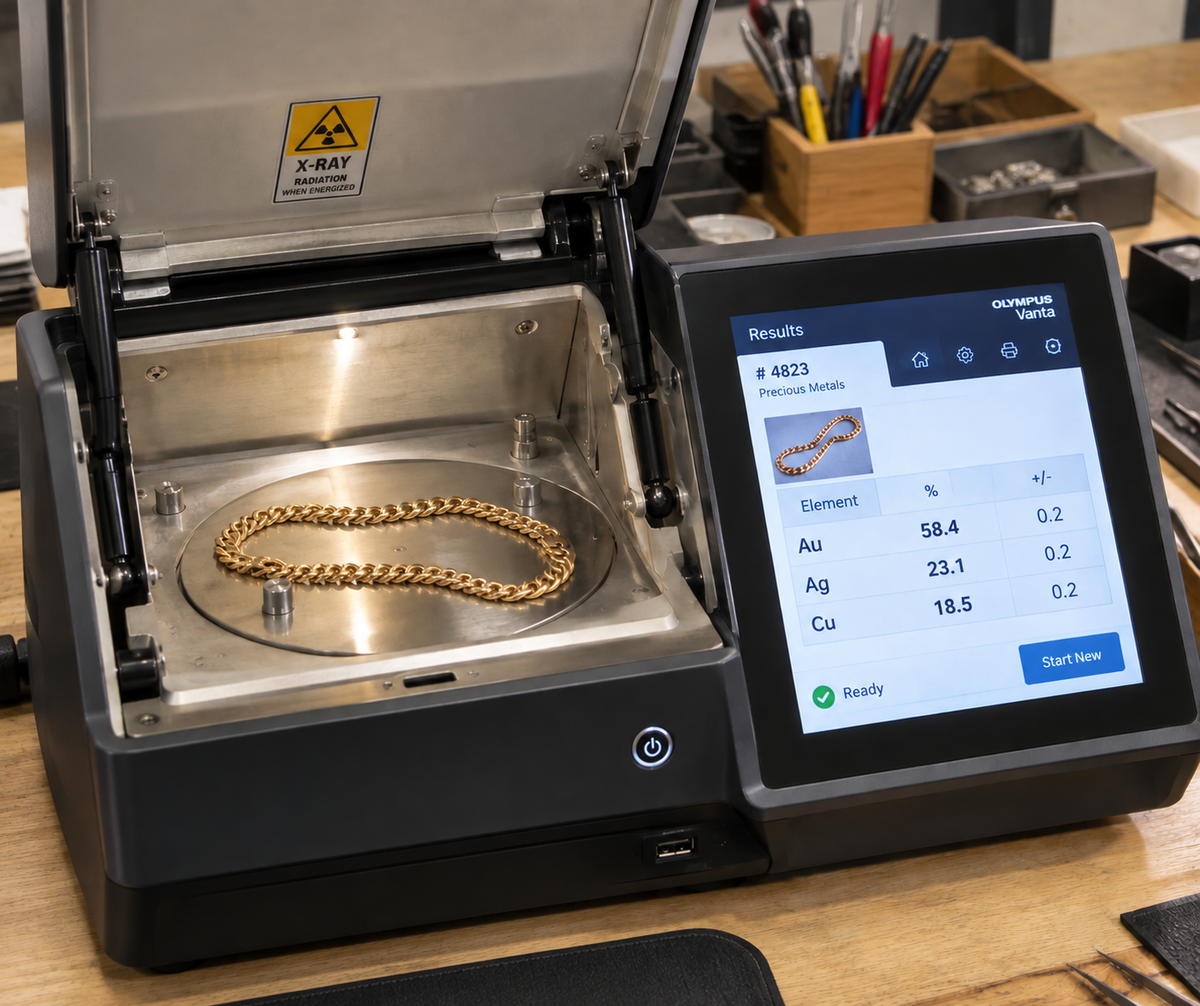
An XRF analyzer is a specialized, high-end laboratory-grade instrument engineered to analyze the elemental composition of precious metals without causing a single scratch.
Here is the exact physics of how the machine reads your jewelry:
-
X-Ray Emission: The scanner directs a controlled primary beam of X-rays directly onto the jewelry piece.
-
Atomic Excitation: When these X-rays collide with the atoms in your gold, they displace electrons from the inner energy shells of the metal.
-
Fluorescent Energy Release: To regain stability, higher-energy electrons fall into the vacant inner shells. As they drop down, they release secondary fluorescent X-rays.
-
Elemental Fingerprinting: Every element in the periodic table - whether it is Gold (Au), Silver (Ag), Platinum (Pt), Copper (Cu), Zinc (Zn), or Nickel (Ni) - emits a unique energy signature with a specific spectral wavelength.
-
Instant Alloy Breakdown: Within seconds, the unit’s multi-channel detector measures the intensity and wavelengths of these emitted rays. The software generates a comprehensive readout on screen, showing the exact percentage of every single metal present in the alloy down to two decimal places.
Why Selling to an XRF-Equipped Jeweler Protects Your Wallet
-
True Composition Testing: Acid tests only evaluate whether a piece holds up to a certain threshold (e.g., "holds at 14K"). An XRF scanner reads deep into the alloy structure, proving whether an under-karated piece is actually 13.5K or if an unstamped piece is a rich 18.2K.
-
Catching Plated vs. Solid Core Pieces: Standard acid tests can be easily fooled by heavy 1-micron to 5-micron gold plating over brass or copper. An XRF scan pinpoints the foreign base metals underneath, giving you complete clarity on whether an item is genuine solid gold or vermeil without having to deeply file into your piece.
-
Full Credit for Secondary Precious Metals: Many vintage 14K and 18K white gold alloys contain measurable percentages of palladium or silver. Basic acid tests completely ignore these extra metals, meaning the buyer pockets the extra value. An XRF readout accounts for every fraction of a percent of silver, platinum, or palladium in your scrap lot, ensuring your payout reflects the total precious metal content.
-
100% Non-Destructive: If you decide not to sell an heirloom or want to preserve it for an upcoming event, your jewelry leaves the counter in the exact same pristine physical condition it arrived in. No acid stains, no deep file grooves, and no metal loss.
4. Watch the Scales and Understand Weight Units
Gold pricing is dictated by weight, but shady operators often exploit the differences between measurement units:
-
Grams (g): The metric standard used by most modern, certified jewelry scales.
-
Pennyweights (DWT): A traditional jeweler unit where 1 pennyweight equals approximately 1.555 grams.
-
Troy Ounces (ozt): Global precious metals trade in Troy ounces (31.1 grams), which are heavier than standard grocery ounces (28.35 grams).
Always make sure the scales are state-certified, level, zeroed out, and clearly visible to you. If a buyer weighs your gold in pennyweights but quotes you a payout based on gram rates without clarifying the conversion, your payout will be cut dramatically.
5. Deduct Non-Precious Weight Accurately
When you sell a diamond cluster ring for scrap value, the diamonds and center stones do not count toward the gold weight.
Unscrupulous buyers will often guess an overly heavy stone weight to artificially deflate the gold payout, or they will keep your diamonds without compensating you for them. A reputable jeweler will:
-
Estimate stone weight using millimeter gauges and standard carat formula charts before offering a scrap price.
-
Provide an option to safely unset and return your diamonds or colored stones so you can keep them for future family heirlooms.
-
Offer an add-on valuation for the stones if they are commercial-grade natural diamonds or certified gems.
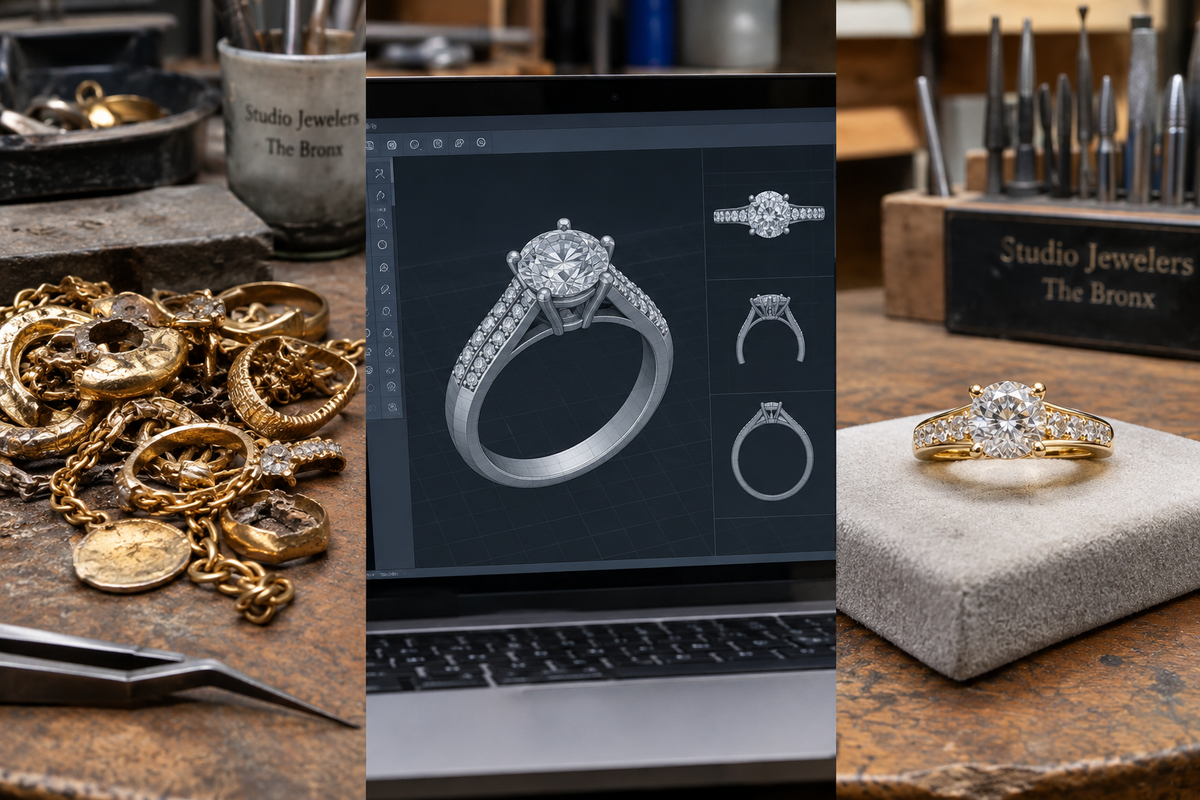
You can also use recovered diamonds and family gems to craft something entirely new through our custom jewelry design service, turning inherited history into a modern piece that fits your style.
6. Explore All Three Exit Routes: Cash, Trade, or Discreet Collateral Loan
Selling outright for cash is not your only choice. Depending on your financial goals and emotional connection to the pieces, examine your options:
Cash on the Spot
Ideal for scrap, broken items, or jewelry you have zero emotional attachment to. You receive immediate liquidity aligned with live trading rates tracked through platforms like Kitco Spot Gold.
Elevated Custom Trade-In Credit
If you plan to buy a new engagement ring, upgrade to a larger certified lab grown diamond, or design a solid gold photo pendant, ask for a trade-in bonus. Because jewelers can use scrap gold directly in refining partnerships for new builds, reputable shops provide elevated store credit over cold cash payouts.
Confidential Pawn and Collateral Cash Services
Life comes with unexpected financial turns. If you need immediate cash for a mortgage payment, medical bill, or business inventory, you do not have to part permanently with your mother's heirloom ring or your favorite luxury watch.
As a multi-generational, family-run Bronx jeweler, Studio Jewelers offers confidential collateral loans handled with complete privacy, grace, and empathy. We evaluate your jewelry, provide immediate funds, and secure your valuables in our high-security vaults until you are ready to redeem them. There are no credit checks, no public records, and no judgment.
As one local client recently noted: "Studio Jewelers has been my family's jeweler for decades. When my father passed, they took the time to go through every single piece of his estate with me. They showed me what was real gold, what was costume, and gave me an honest, transparent payout without any pressure. You cannot find that kind of integrity at a mall chain."
7. Avoid the Mail-In Envelope Trap
Television commercials and internet ads regularly push prepaid envelopes promising "top dollar" for your gold sent through the mail.
Once your gold is in an envelope on an airplane, you have surrendered all leverage. These mail-in operations rely on the fact that most consumers will accept a lowball offer rather than pay return shipping fees or fight through automated customer service phone loops.
Working with an established brick-and-mortar jeweler gives you face-to-face accountability. You watch the XRF scan, verify the scale reading, ask questions, and walk away with your items in hand if you are not completely satisfied with the valuation.
The Studio Jewelers Difference in The Bronx
Since opening our doors in the Bay Plaza Shopping Center in 1990, Studio Jewelers has stood for transparency, craftsmanship, and community accountability. We live and work in this neighborhood. We see our customers at the grocery store, we celebrate milestone anniversaries with them, and we run annual holiday charity drives to give back to local Bronx families who have trusted us through three decades of service.
When you bring your estate jewelry, scrap gold, or family treasures to our showroom, you are consulting with master bench jewelers who understand metal fabrication, stone setting, and precision artisan casting. We treat your time and your heirlooms with the respect they deserve.
Fine jewelry often holds memories of hard work, family milestones, and personal triumphs. Whether you decide to turn unwearable gold into immediate cash, safeguard it through a confidential short-term loan, or work with our bench team on custom design services to build a new family ring, your valuables deserve an evaluation rooted in honesty, precision, and respect.
Industry Resources & References
-
Gemological Institute of America (GIA) - Understanding Gold Karats and Quality
-
Federal Trade Commission (FTC) - Jewelry Guides and Consumer Tips for Selling Gold
-
USGS - U.S. Geological Survey Gold Mineral Commodity Summaries